Self-Managing vs Using a Property Management Company: Which Is Better for Landlords?

Owning a rental property can be an excellent long-term investment, but being a landlord involves considerably more than finding a tenant and collecting rent each month. Properties need to be marketed, applicants need to be assessed, documentation needs to be handled correctly, rent needs to be monitored, maintenance issues inevitably arise and the property itself needs ongoing attention throughout the tenancy.
For landlords, this creates an important decision: should you manage the property yourself or use a professional property management company?
There is no single answer that suits every landlord. Someone with one property, plenty of available time and considerable letting experience may be comfortable managing independently. A landlord with a demanding career, several properties, limited knowledge of current rental requirements or a home located some distance away may find that professional management makes considerably more sense.
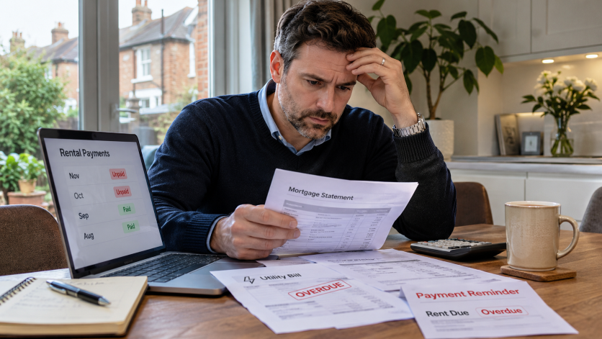
The real comparison, therefore, is not simply between paying a management fee and managing for free. Self-management has its own cost in time, administration, responsibility and risk.
In this guide, we look at the differences between self-managing and using a property management company, what fully managed property management actually involves and why landlords increasingly choose professional support for their rental properties.
What Does Self-Managing a Rental Property Actually Involve?
Self-management gives a landlord direct control over almost every aspect of the tenancy. For experienced landlords who enjoy being actively involved, that can be appealing.
However, it also means taking responsibility for the work normally performed by a letting and property management company.
Before the tenancy begins, you may need to assess the property’s rental value, prepare it for market, arrange photography, advertise it, respond to enquiries, conduct or organise viewings and evaluate prospective tenants.
Once you identify an applicant, there is another layer of work involving referencing, identity and Right to Rent checks, tenancy documentation, deposits and preparation for move-in.
The workload does not disappear once the tenant receives the keys. You then become responsible for ongoing communication, monitoring rent, dealing with maintenance, arranging contractors, keeping records, managing inspections and eventually coordinating the end of the tenancy.
None of these responsibilities is necessarily difficult in isolation. The challenge is that they occur throughout the year and rarely arrive at a convenient time.
A maintenance problem does not wait until you have finished work for the day. A tenant who has an urgent question does not necessarily contact you when your diary is empty. If a contractor fails to attend, somebody still needs to reorganise the appointment and communicate with the tenant.
This is the practical side of being a landlord that is easily underestimated when calculating the return from a rental property.
Self-Managing vs Using a Property Management Company
The biggest difference between self-management and professional management is who takes responsibility for the day-to-day operation of the tenancy.
When you self-manage, you are effectively both the property owner and the property manager.
When you appoint a management company, you retain ownership and control over important decisions, while much of the operational workload is handled professionally on your behalf.
The Advantages of Self-Managing
Self-management can make sense for the right landlord.
The most obvious advantage is that you do not pay an ongoing management fee. If you have the knowledge and time to perform the work yourself, retaining that fee may improve your immediate net rental income.
You also maintain direct contact with your tenants and have complete visibility over what is happening with the property. Some landlords genuinely enjoy this involvement and prefer personally choosing contractors, arranging visits and making every management decision.
Self-management can therefore work particularly well if you live close to the property, understand the rental sector, have reliable contractors available and can respond promptly when tenants need assistance.
The important question is whether that description genuinely reflects your circumstances.
The Challenges of Self-Managing
The financial saving associated with self-management can look attractive until you begin calculating the value of your time.
Imagine that you spend several hours responding to enquiries and arranging viewings when the property becomes available, additional time checking applicants and organising paperwork, and then continue to spend time throughout the tenancy dealing with maintenance, administration and tenant communication.
The property may be producing income, but it is also creating another role for you to perform.
This can become particularly difficult for landlords who already have full-time careers or businesses. It can also become increasingly inefficient as a portfolio grows. Managing one property is very different from managing five, ten or twenty.
There is also the issue of expertise. Rental property management involves responsibilities relating to tenancy documentation, deposits, tenant checks, property safety and ongoing compliance. A landlord who manages independently needs to remain informed rather than assuming that the process remains unchanged from one tenancy to the next.
For many landlords, the question eventually becomes less about whether they can manage the property themselves and more about whether they should be spending their time doing it.
What Does a Property Management Company Do for a Landlord?
A good property management company acts as the operational link between the landlord, tenant and property.
Instead of the landlord personally managing every enquiry, payment, maintenance request and administrative task, the management company handles the agreed responsibilities on the landlord’s behalf.
The exact service depends on the management package chosen.
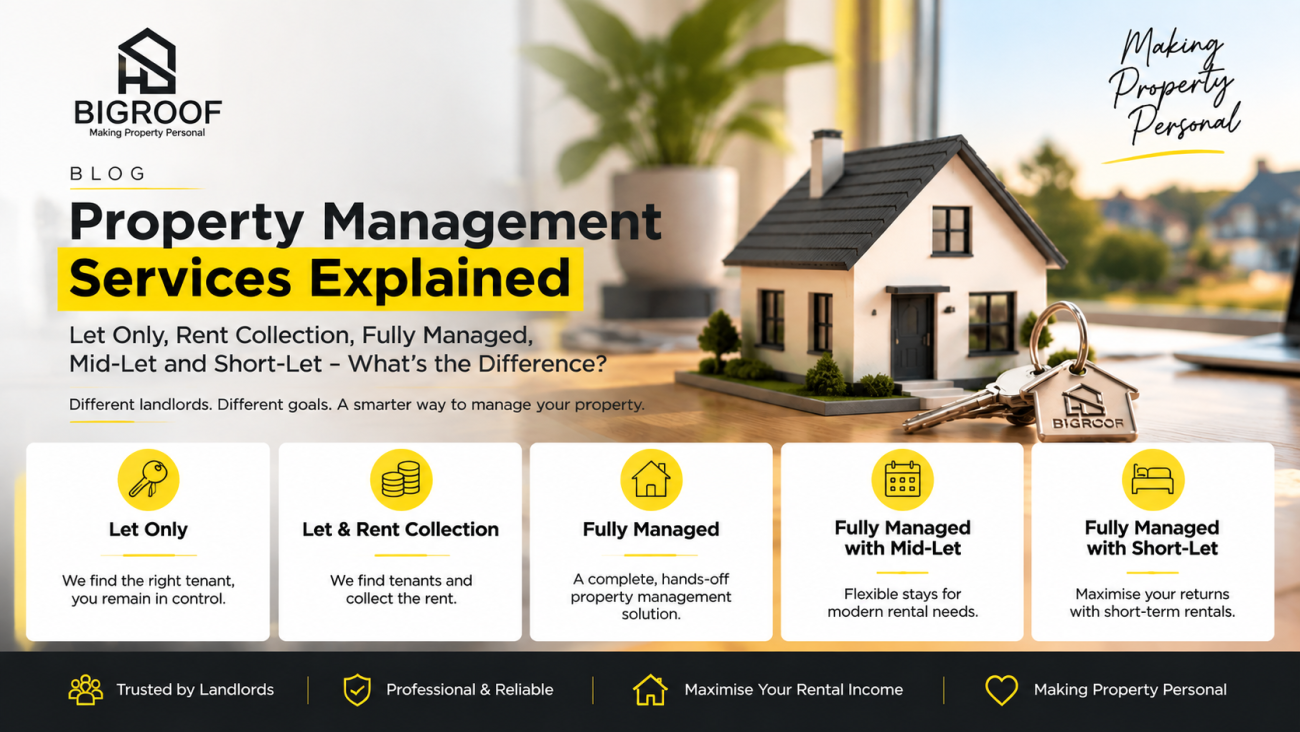
At BigRoof, landlords can choose different levels of support depending on how involved they want to remain. This includes Let Only, Let & Rent Collection, Fully Managed and Fully Managed with Mid-Let, allowing a landlord to outsource selected responsibilities or move towards a much more hands-off arrangement.
This is important because professional property management does not necessarily mean surrendering control of your investment. It means deciding which responsibilities are worth keeping and which are better handled by a dedicated property management team.
What Does Fully Managed Property Management Actually Include?
The phrase “fully managed” can sound vague, so landlords should always understand exactly what they are receiving.
For BigRoof landlords, the management journey can begin before a tenant has even been found.
1. Understanding What Your Property Could Rent For
Setting the right rent is one of the most important decisions a landlord makes.
Price the property too low and you may unnecessarily reduce your rental income. Price it unrealistically high and you may reduce interest and increase the risk of an expensive void period.
BigRoof begins its landlord process with a property assessment and realistic rental valuation, considering the property and the appropriate rental strategy before it is brought to market.
This helps shift the conversation away from simply asking, “What is the highest rent I can advertise?” towards the more useful question, “What strategy gives this property the best opportunity to perform?”
2. Preparing the Property for the Rental Market
Presentation can influence both the amount of interest a property receives and the type of tenant it attracts.
Before marketing, there may be maintenance issues or improvements worth addressing. Even relatively small details can affect how a property appears online and during a viewing.
BigRoof’s approach includes assessing how to make the property market-ready so that landlords are not simply uploading photographs and hoping for enquiries.
3. Professional Property Marketing
Finding the right tenant starts with reaching the right audience.
A managed letting service can take responsibility for photography, property details, advertising and the wider marketing process.
For landlords, this removes one of the most time-consuming stages of finding a tenant: creating the listing, managing enquiries and coordinating the next steps.
4. Arranging Viewings and Handling Enquiries
Property enquiries rarely arrive according to a landlord’s preferred schedule.
Potential tenants may want information while you are at work, viewings may need to take place at different times and follow-up questions need to be answered quickly if you want to maintain interest.
Having a professional team manage this process means the landlord does not need to coordinate every conversation personally.
5. Finding and Referencing Tenants
Finding a tenant is relatively straightforward when demand is strong. Finding an appropriate tenant requires more care.
BigRoof’s landlord service includes tenant referencing, credit and identity checks and Right to Rent checks as part of its tenant qualification process.
This is one of the areas where professional management can be particularly valuable. The objective should not simply be to fill the property as quickly as possible, but to establish a tenancy with an appropriately assessed tenant.
6. Tenancy Agreements and Move-In Management
Once the right tenant has been selected, there is still considerable work to complete before move-in.
BigRoof’s service structure includes signed tenancy agreements, deposit collection, pre-tenancy safety checks and, within the appropriate management arrangements, move-in management.
A properly organised start to the tenancy benefits both sides. The landlord knows the necessary processes have been followed, while the tenant begins the relationship with clear expectations and a defined point of contact.
7. Deposit Protection and Management
Managing a deposit involves more than simply receiving money from a tenant.
Within its management services, BigRoof can handle deposit protection and ongoing deposit management, reducing another administrative responsibility for the landlord.
This also becomes relevant at the end of the tenancy, when the condition of the property and any proposed deductions may need to be considered.
8. Monthly Rent Collection
Rent collection sounds simple when everything runs perfectly. The tenant pays on time, the landlord receives the money and nothing further needs to happen.
Professional rent collection creates a structured process around those payments.
BigRoof offers monthly rent collection and remittance to landlords within its management options, meaning the landlord does not need to personally monitor and administer every monthly payment.
For landlords who want some assistance without outsourcing all property management, BigRoof also offers a Let & Rent Collection service.
9. Tenant Communication
A rental property creates an ongoing relationship between tenant and landlord.
Questions arise. Maintenance needs to be reported. Access may need to be arranged. Information has to pass between different parties.
With professional management, tenants have a clear route for communication rather than relying on the landlord to be personally available whenever something happens.
For landlords with demanding careers, several properties or other responsibilities, removing themselves from routine tenant communication can significantly reduce the time associated with property ownership.
10. Property Inspections
A landlord should not only think about a property when something goes wrong.
Regular inspections help provide visibility over how the property is being maintained and can identify issues that may need attention.
BigRoof includes regular property inspections within its management structure, helping landlords maintain greater oversight without necessarily having to conduct every visit themselves.
11. Maintenance Coordination
Maintenance is one of the clearest examples of why landlords choose professional management.
Suppose a tenant reports a problem on Monday morning. Somebody needs to understand the issue, decide what action is required, communicate with the tenant, find an appropriate contractor, arrange access and follow up.
Even a relatively routine repair can involve several separate tasks.
BigRoof’s management services include access to maintenance contractors and support with property maintenance, giving landlords a management structure when issues arise rather than requiring them to coordinate everything personally.
12. Ongoing Compliance Support
Landlord responsibilities do not stop after the tenancy begins.
BigRoof’s management structure includes compliance advice and ongoing Right to Rent checks where applicable, providing landlords with professional support as the tenancy continues.
This is increasingly important because property management is not static. Regulations, processes and landlord responsibilities evolve, and landlords need their management practices to evolve with them.
13. End-of-Tenancy Management
Eventually, every tenancy reaches an end.
The property needs to be checked, the tenant’s move-out needs to be managed and the property may need to be prepared for its next occupant.
BigRoof’s management structure includes end-of-tenancy checks and support managing tenant move-outs, allowing the process to move from one tenancy towards the next in a more organised way.
Why Is a Property Management Company Good for Landlords?
The strongest argument for professional property management is not simply that somebody else answers the telephone.
The real value comes from time, structure, expertise and continuity.
It Gives You Back Your Time
Time is one of the few resources a landlord cannot recover.
If you spend an evening organising a repair, Saturday conducting viewings and part of Monday chasing paperwork, those hours have a value even if no invoice arrives for them.
A management fee is visible.
The cost of your own time often is not.
For a landlord with a demanding career, family responsibilities, another business or multiple investments, outsourcing day-to-day property management can therefore be a rational financial decision as well as a lifestyle decision.
It Creates Professional Distance
Direct landlord-tenant relationships can work extremely well, but difficult conversations can become personal.
Late payments, maintenance disagreements, access arrangements and end-of-tenancy issues are easier to handle when there is a professional process between the tenant and property owner.
A property management company provides that layer of professional communication.
This does not mean treating tenants impersonally. In fact, responsive professional management can improve the tenant experience because there is a clear process for raising questions and reporting problems.
It Helps Landlords Stay Organised
Rental properties generate paperwork, dates, payments, maintenance records and ongoing responsibilities.
Managing all of this informally may be manageable with one straightforward tenancy. As the number of properties increases, the administrative burden can become substantial.
A professional management system brings structure to those processes.
For portfolio landlords, this can be particularly valuable because management needs to remain consistent across several properties and tenants.
It Can Reduce the Stress of Maintenance
Maintenance is unavoidable.
Even a well-maintained property will eventually need attention, and the difficulty is rarely just paying for the repair. It is diagnosing the problem, sourcing somebody appropriate, arranging access and following up.
Professional management moves much of that coordination away from the landlord.
Instead of becoming the operational centre of every repair, the landlord can rely on an established management process.
It Can Improve the Tenant Experience
Good property management benefits tenants as well as landlords.
A tenant wants to know who to contact, how to report an issue and what happens next.
When communication is clear and maintenance is handled properly, the tenancy is more likely to feel professionally managed.
That matters to landlords because good tenants are valuable. Creating a well-managed rental experience can support a more stable landlord-tenant relationship.
It Makes Portfolio Growth More Manageable
There is a practical limit to how many properties one person can manage efficiently while also maintaining a career, business or personal life.
A landlord may comfortably self-manage one property but find that the model becomes increasingly difficult as the portfolio expands.
Professional management provides infrastructure that can scale alongside the portfolio.
Instead of every additional property creating another complete set of management responsibilities for the landlord, there is already a system in place to absorb much of the operational workload.
Is Fully Managed Property Management Worth the Cost?
This is usually the question landlords eventually reach.
The answer depends on what you are comparing.
If you compare a management fee against a hypothetical situation where self-management requires no time, no administration and no specialist knowledge, self-management will naturally appear cheaper.
That is not a realistic comparison.
Instead, consider what managing the property yourself actually requires.
How many hours do you spend dealing with the property each year? What is an hour of your time worth? How easily can you attend a property if something happens? Do you have contractors available? Are you comfortable managing tenant issues? Do you understand the processes you are responsible for? Would you rather spend those hours on your career, family, business or finding your next investment?
For some landlords, self-management will still be the right answer.
For others, the value of a fully managed service lies precisely in not having to become a full-time property manager simply because they own a rental property.
Who Should Consider Fully Managed Property Management?
Fully managed property management can be particularly suitable for landlords who have demanding careers, own several rental properties, live a significant distance from their property, are new to being a landlord or simply prefer their property investment to require less day-to-day involvement.
It can also make sense for accidental landlords. Someone who has inherited a property, moved elsewhere while retaining a previous home or unexpectedly become responsible for a rental property may have no desire to learn every operational aspect of property management.
Professional management allows ownership of the asset to remain separate from the daily job of managing it.
When Might Self-Management Still Be the Right Choice?
Professional management is not necessary for every landlord.
If you have considerable property experience, live nearby, understand your responsibilities, enjoy dealing with tenants, have trusted contractors and genuinely have enough time to manage the property properly, self-management may work very well.
There is also a middle ground.
You do not necessarily have to choose between doing absolutely everything yourself and outsourcing everything.
BigRoof provides different levels of landlord support, allowing you to choose a service based on what you actually need.
If tenant sourcing is your main challenge, Let Only may be appropriate.
If you want assistance finding tenants and collecting rent while remaining involved elsewhere, Let & Rent Collection provides another option.
If you want much more comprehensive support with the ongoing tenancy, Fully Managed may make more sense.
For landlords considering a different rental strategy, BigRoof also offers Fully Managed with Mid-Let.
The Better Question: Where Is Your Time Best Spent?
The decision between self-management and professional property management is often presented as a simple question of cost.
For many landlords, that misses the point.
Suppose you own a rental property as part of a long-term investment strategy. Your objective is presumably not to create another job for yourself. It is to own an asset that produces income and, potentially, contributes to your longer-term financial goals.
If you genuinely enjoy managing the property, there is nothing wrong with doing so.
However, if tenant enquiries, maintenance calls, inspections, paperwork and rent administration are consuming hours that could be spent on your career, family, business or expanding your portfolio, the calculation changes.
The most important question may therefore be:
Does personally managing this property represent the best use of my time?
Why Landlords Choose BigRoof
BigRoof is a full-service property rentals and management company operating across the UK, built on more than two decades of hands-on property experience.
The business began by managing a small portfolio of HMOs and developed through AirOperate Residential before evolving into today’s technology-led BigRoof operation.
That experience matters because property management is not simply about administration. It requires an understanding of rental strategy, tenant expectations, property condition, ongoing management and the practical realities of owning residential property.
BigRoof’s landlord services can support the complete rental journey, including property assessment, rental valuation, preparing a property for market, professional marketing, tenant sourcing and vetting, tenancy administration, rent collection, property inspections, maintenance coordination and ongoing management.
Whether you own a single flat, an HMO, a family home or a growing portfolio, the objective is the same: make property ownership simpler while helping your rental investment perform effectively.
Let BigRoof Manage the Property While You Remain the Landlord
Being a landlord does not mean you have to personally perform every task associated with managing a tenancy.
The right property management arrangement allows you to decide how involved you want to be while ensuring the practical work required to operate the property continues to be handled.
For some landlords, that means professional help finding a tenant. For others, it means outsourcing rent collection. For landlords who want to step away from most day-to-day responsibilities, fully managed property management can provide a much more hands-off approach.
BigRoof offers flexible management options designed around different landlords, properties and rental strategies.
If you are currently self-managing and wondering whether your time could be better spent elsewhere, or you are preparing to rent out a property for the first time, speak to BigRoof about the level of management that suits you.
BigRoof: Built on experience. Backed by innovation. Powered by results.